When it comes to Silicon Labs, many friends engaged in electronic R&D and production may have heard of it. We usually call it Silicon Labs China domestically. Founded in Austin, Texas, USA in 1996, the company is not a "newcomer" in the semiconductor industry. Over the years, it has been focusing on mixed-signal chips and low-power wireless connectivity chips, and is a typical fabless design company—simply put, it focuses solely on R&D and design, and entrusts production to professional wafer foundries, which allows it to concentrate more on technological innovation.

The biggest characteristics of Silicon Labs' chips are low power consumption, high performance, and good compatibility, which are widely used in fields such as the Internet of Things (IoT), industrial control, and consumer electronics. Whether it is smart lights at home, industrial control equipment in factories, or even the serial port debugging equipment we commonly use, it is likely to use its chips. It is a leading player in the IoT wireless connectivity field, with products covering various protocols such as low-power Bluetooth and Zigbee, as well as various microcontrollers and clock chips, and has always enjoyed a good reputation.
On February 4, 2026, a major news broke in the semiconductor industry—global chip giant Texas Instruments (TI) announced that it would acquire Silicon Labs at an all-cash price of $231 per share, with a total transaction value of approximately $7.5 billion. This is also the largest acquisition by TI since it acquired National Semiconductor in 2011.
Some people may ask, why does TI, such a large company, want to acquire Silicon Labs? In fact, the reason is very simple: the two parties have strong business complementarity. TI's core advantages lie in analog chips and embedded processing, and it has its own wafer fabs with strong manufacturing capabilities; while Silicon Labs is good at low-power wireless connectivity and mixed-signal technology, has profound accumulation and a stable customer base in the IoT field, and it adopts a fabless model, with flexible R&D and close proximity to market demand.

After this acquisition, TI can rely on Silicon Labs' technologies and products to make up for its shortcomings in the wireless connectivity field and further improve its product layout in the IoT and industrial control fields; while Silicon Labs can rely on TI's strong manufacturing capabilities, financial strength and global channels to make its chips cover a wider market, which is a win-win situation for both parties. For downstream enterprises, the existing chip models of Silicon Labs will continue to be supplied normally in the short term, and may be gradually integrated into TI's product system in the future, so procurement and technical support will be more guaranteed.
Next, let's talk about each of these concerned Silicon Labs chip models one by one. We will not discuss complex professional terms, but only focus on core parameters and actual uses, so even beginners can understand. All models are mainstream products of Silicon Labs, covering multiple categories such as USB-to-serial, MCU, clock, wireless Bluetooth, and sensors, which are very commonly used in daily R&D and production.
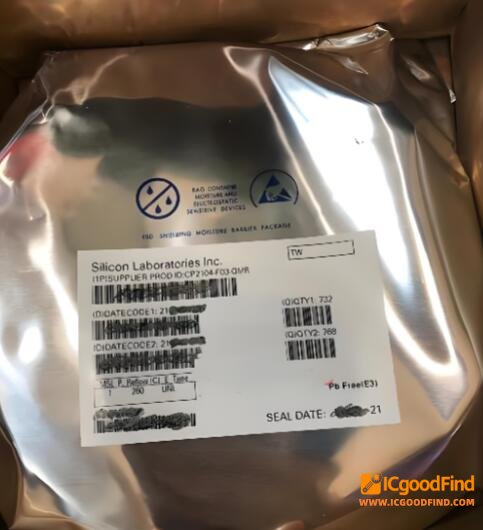
The core function of this type of chip is to convert the USB interface of a computer into a commonly used serial port (UART), facilitating communication between the computer and microcontrollers/embedded devices. For example, debugging microcontroller programs and transmitting data to serial port devices, it is one of the most basic and commonly used chips in electronic R&D.
1. CP2102-GMR: A classic USB-to-serial chip. Core parameters: USB 2.0 full-speed interface, supports UART serial communication, operating voltage of 3.3V, low power consumption, package type is QFN28. Application scenarios: Microcontroller debugging, serial port modules, USB-to-TTL adapters. For example, many of the USB-to-serial modules we usually use to debug 51 or STM32 microcontrollers adopt this chip, which has high cost performance and strong stability.
2. CP2102-GM: Belongs to the same series as CP2102-GMR, with basically the same core parameters—both are USB 2.0 full-speed, 3.3V power supply, and USB-to-UART. The only difference is the package details and slight adjustments to some electrical parameters, with better compatibility and slightly stronger anti-interference ability. Application scenarios are the same as CP2102-GMR, suitable for serial communication scenarios with higher stability requirements, such as serial port debugging of industrial equipment.
3. CP2102N-A02-GQFN28R: An upgraded version of CP2102. Core parameters: USB 2.0 full-speed, supports multiple communication methods such as UART, SPI, and I2C, operating voltage of 3.0-3.6V, package type is QFN28 (small-size SMD, suitable for small devices), with built-in power management function and lower power consumption than the old version. Application scenarios: Small embedded devices, smart wearables, portable serial port devices, such as serial port debugging of smart bracelets and USB communication of small sensors.
4. CP2102N-A02-GQFN24R: Belongs to the same series as the above CP2102N-A02-GQFN28R, with exactly the same core functions. The only difference is the package—QFN24 is smaller in size and has fewer pins than QFN28, making it more suitable for devices with extremely high requirements on circuit board space, such as micro serial port modules and small IoT terminals.
5. CP2102N-A02-GQFN20R: A small-package version of the CP2102N series. Core parameters: USB 2.0 full-speed, USB-to-UART, 3.0-3.6V power supply, package type QFN20, smallest size and lowest power consumption. Application scenarios: Ultra-small embedded devices, wearables, micro sensors, such as mini USB-to-serial modules and debugging interfaces of smart watches.
6. CP2102N-A02-GQFN28: Has exactly the same parameters and functions as CP2102N-A02-GQFN28R. The only difference is that "R" represents lead-free environmentally friendly packaging. This model without "R" has slightly different package specifications, but there is almost no difference in compatibility in actual use, and the application scenarios are the same, suitable for various embedded devices that need USB-to-serial conversion.
7. CP2104-F03-GMF: A USB-to-serial chip. Core parameters: USB 2.0 full-speed, supports UART serial port, operating voltage of 3.3V, package type QFN24, with built-in GPIO pins that can additionally realize simple IO control functions. Application scenarios: Serial port devices with IO control, microcontroller debugging, small industrial control modules, such as embedded devices that need to realize both serial communication and simple IO control.
8. CP2105-F01-GMR: A dual-port USB-to-serial chip. Core parameters: USB 2.0 full-speed, supports 2 independent UART serial ports, 3.3V power supply, package type QFN28, can realize two-way serial communication at the same time, with strong stability. Application scenarios: Devices that need multiple serial ports, such as industrial controllers, multi-channel serial port debuggers, and serial communication modules of routers.
9. CP2108-B03-GMR: A multi-port USB-to-serial chip. Core parameters: USB 2.0 full-speed, supports 8 independent UART serial ports, 3.3V power supply, package type QFN48, with built-in power management and strong anti-interference ability. Application scenarios: Multi-serial port devices, such as industrial automation control, serial servers, and multi-channel embedded device debugging platforms, suitable for scenarios that need to control multiple serial port devices at the same time.
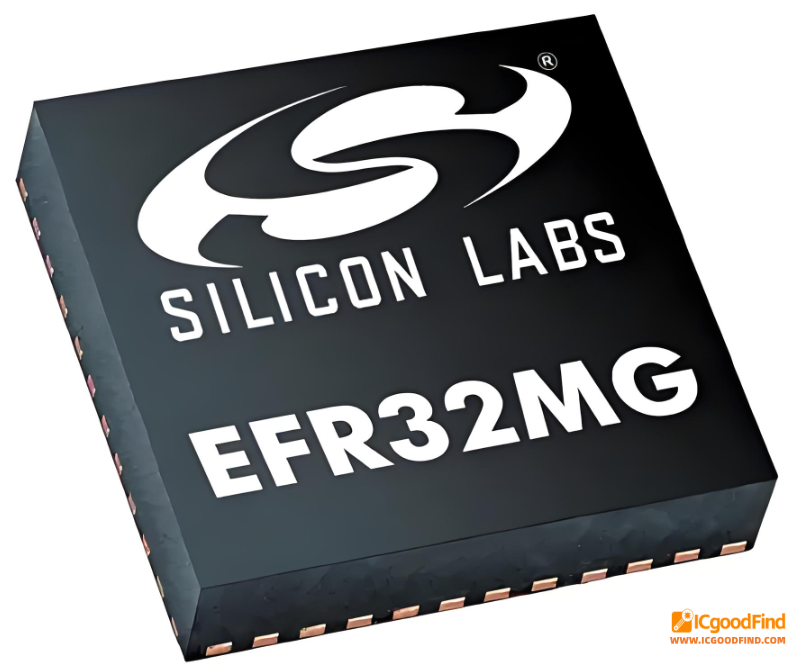
MCU, as we often call it, is a microcontroller, which is equivalent to the "brain" of embedded devices, responsible for processing data and controlling peripherals. Silicon Labs' EFM8 and C8051 series MCUs focus on low power consumption and small size, suitable for industrial control, consumer electronics and other scenarios.
10. EFM8BB21F16G-C-QFN20R: 8-bit MCU. Core parameters: Clock frequency 25MHz, flash memory 16KB, RAM 1KB, operating voltage 2.2-3.6V, low-power design, package type QFN20 (small-size SMD), supports SPI and I2C communication. Application scenarios: Small industrial control, sensor data collection, consumer electronics control, such as data processing of temperature and humidity sensors and control of small LED lights.
11. EFM8BB21F16G-C-QFN20: Has exactly the same core parameters and functions as the above model. The only difference is the package—the model without "R" adopts non-environmentally friendly packaging (no difference in performance in actual use), and the application scenarios are the same, suitable for civilian equipment and prototype R&D with no high requirements on packaging environmental protection.
12. EFM8BB21F16I-C-QFN20R: An industrial-grade version of the EFM8BB21 series. Core parameters are the same as EFM8BB21F16G-C-QFN20R (25MHz clock frequency, 16KB flash memory, 3.3V power supply). The difference is that "I" represents industrial grade, with a wider operating temperature range (-40℃~85℃) and stronger anti-interference ability. Application scenarios: Industrial control equipment, outdoor sensors, embedded devices in harsh environments, such as small controllers in factories and outdoor temperature and humidity collection modules.
13. EFM8BB51F16G-C-QFN20R: An upgraded 8-bit MCU of the EFM8BB series. Core parameters: Clock frequency 25MHz, flash memory 16KB, RAM 1.25KB, operating voltage 2.2-3.6V, low power consumption, package type QFN20, with built-in ADC (analog-to-digital conversion) function that can directly collect analog signals. Application scenarios: Sensor data collection, industrial control, consumer electronics, such as data collection of light sensors, control of small motors, and control modules of smart small home appliances.
14. C8051F340-GQR: A high-performance 8-bit MCU. Core parameters: Clock frequency 48MHz, flash memory 32KB, RAM 2KB, operating voltage 2.7-3.6V, supports multiple communication methods such as SPI, I2C, and UART, with built-in ADC and DAC functions, package type QFP32. Application scenarios: Industrial control, medical equipment, smart home, such as small industrial controllers, portable medical testing equipment (such as blood glucose meters), and control cores of smart sockets. Its performance is stronger than that of the EFM8 series, suitable for slightly more complex control scenarios.
The core function of a clock chip is to provide a stable and accurate clock signal for the entire electronic device, which is equivalent to the "time benchmark" of the device, ensuring that all components of the device work synchronously. It is widely used in communication, industry, consumer electronics and other fields.
15. SI53307-B-GMR: Programmable clock buffer. Core parameters: Input frequency range 1MHz-710MHz, adjustable output frequency, operating voltage 3.3V, package type QFN24, high clock accuracy and strong anti-interference ability. Application scenarios: Communication equipment, servers, industrial control, such as clock synchronization of routers and switches, time benchmark of servers, and synchronous control of industrial equipment.
16. SI52147-A01AGMR: Low-power clock oscillator. Core parameters: Output frequency 1MHz-100MHz, operating voltage 1.8-3.3V, extremely low power consumption, package type QFN16, strong clock stability, suitable for low-power devices. Application scenarios: IoT devices, wearables, portable electronic devices, such as smart bracelets, micro sensors, and portable debugging equipment, providing stable clocks for devices while reducing overall power consumption.
17. SI5351A-B-GTR: Programmable clock generator. Core parameters: Input frequency 25MHz (external crystal), adjustable output frequency (from several kHz to more than 200MHz), supports 3 independent outputs, operating voltage 3.3V, package type QFN24, high accuracy, strong programmability, and frequency can be configured through I2C interface. Application scenarios: Communication equipment, embedded devices, radio frequency modules, such as clock benchmarks of radio frequency communication modules, external clocks of microcontrollers, and frequency control of small communication equipment.
This type of chip is mainly responsible for realizing the wireless communication function of devices, focusing on low power consumption, suitable for scenarios that need wireless connectivity such as IoT, smart wearables, and wireless sensors.
18. BLE121LR-A-M256K: Low-power Bluetooth module chip. Core parameters: Supports BLE 4.2 protocol, communication distance up to 100 meters or more (long-distance model), flash memory 256KB, RAM 16KB, operating voltage 1.8-3.6V, low power consumption, package type QFN40. Application scenarios: IoT devices, wireless sensors, smart wearables, such as outdoor wireless temperature and humidity sensors, wireless communication of smart door locks, and long-distance Bluetooth remote controls.
19. BLE112-A-V1: Low-power Bluetooth module chip. Core parameters: Supports BLE 4.0 protocol, communication distance 10-30 meters, flash memory 128KB, RAM 8KB, operating voltage 2.0-3.6V, low power consumption, module-type package (can be directly soldered for use). Application scenarios: Short-distance wireless devices, smart wearables, small IoT terminals, such as communication between smart bracelets and mobile phones, short-distance sensor data transmission, and micro Bluetooth controllers.

This type of chip covers functions such as sensors, video interfaces, and bridging, with strong pertinence, suitable for specific application scenarios.
20. SI1142-A11-GMR: Ambient light sensor chip. Core parameters: Can detect visible light and infrared light intensity, operating voltage 2.5-3.3V, low power consumption, package type QFN16, with built-in I2C communication interface that can be directly connected to MCU. Application scenarios: Consumer electronics, smart wearables, lighting control, such as automatic brightness adjustment of mobile phones and tablets, light detection of smart watches, and brightness sensor control of smart lights.
21. SII9022ACNU: HDMI video interface chip. Core parameters: Supports HDMI 1.3 protocol, can realize conversion and transmission of video signals, operating voltage 3.3V, package type QFP64, supports 1080P high-definition video output. Application scenarios: Consumer electronics, display devices, such as video interface conversion of TV boxes, monitors, and projectors, realizing high-definition video connection between devices and displays.
22. SII3132CNU: SATA bridge chip. Core parameters: Supports SATA 2.0 protocol, can realize conversion between SATA interface and USB interface, operating voltage 3.3V, package type QFN48, fast transmission speed and strong stability. Application scenarios: Storage devices, embedded systems, such as bridging of mobile hard drives, SATA storage expansion of embedded devices, and USB-to-SATA adapters.
Although Silicon Labs has been acquired by TI, its chip technology and product strength are still strong. The above models cover most commonly used scenarios in electronic R&D and production. Whether it is for beginner R&D or enterprise mass production, you can find suitable models. TI's acquisition will only make Silicon Labs' chips more guaranteed and cover a wider range.
Spot chip platforms like ICGOODFIND in China are also playing a silent role, solving the problems of "difficulty in finding goods and fear of counterfeits" when everyone purchases chips, connecting chip original factories and downstream enterprises. Together with Silicon Labs and TI, they improve the entire semiconductor industry chain, make the international chip supply chain more stable, and make hardware engineers more efficient and worry-free in technological R&D and production.
